

The Ocean Can Be a Bridge, a play about Frederick Douglass's 1846 visit to Exeter, is at the Cygnet on 1 and 2 October. Tickets £15, 7.30pm start.
A play about the night Frederick Douglass spoke in Exeter comes to the Cygnet Theatre on Thursday 1 and Friday 2 October. Douglass, who had escaped slavery in the United States, visited the city on a speaking tour in 1846.
The Ocean Can Be a Bridge was written by Dave Samuels and Richard Bradbury. An early version was performed in Exeter last autumn. This is a longer version, and after Exeter it moves on to Bridport and Bristol. (Exeter City Council, 18 September 2026)
Times and tickets
- Where: Cygnet Theatre, Friars Gate, Exeter EX2 4AZ, above the Quay
- When: Thursday 1 October and Friday 2 October 2026
- Doors: 7pm, and the play starts at 7.30pm
- Tickets: £15, plus a £1.50 booking fee
When we checked on 27 September, the ticket pages showed 25 tickets left for Thursday and 40 for Friday. Riversmeet says last autumn’s Exeter performances sold out. (Tickets, Thursday; tickets, Friday)
What happened in 1846
Douglass spoke in Exeter on 28 August 1846. Telling Our Stories, the Devon multicultural history project, records that he gave his address at the Royal Subscription Rooms on Northernhay Place. Its title was “A Call for the British Nation to Testify Against Slavery”.
His argument was that Britain could help end slavery in America from the outside. The Exeter Western Times reported his words on 5 September 1846:
”…he now believed that England possessed a power, superior to any power in the United States to operate against slavery.”
(Telling Our Stories, Finding Our Roots)
The play is set around that visit. The theatre’s listing describes tensions already “simmering in the Abolitionist movement” reaching boiling point when Douglass arrived in the Westcountry. It also shows Douglass himself torn “between being the public face of an international movement and being true to himself”.
How a forgotten visit was found
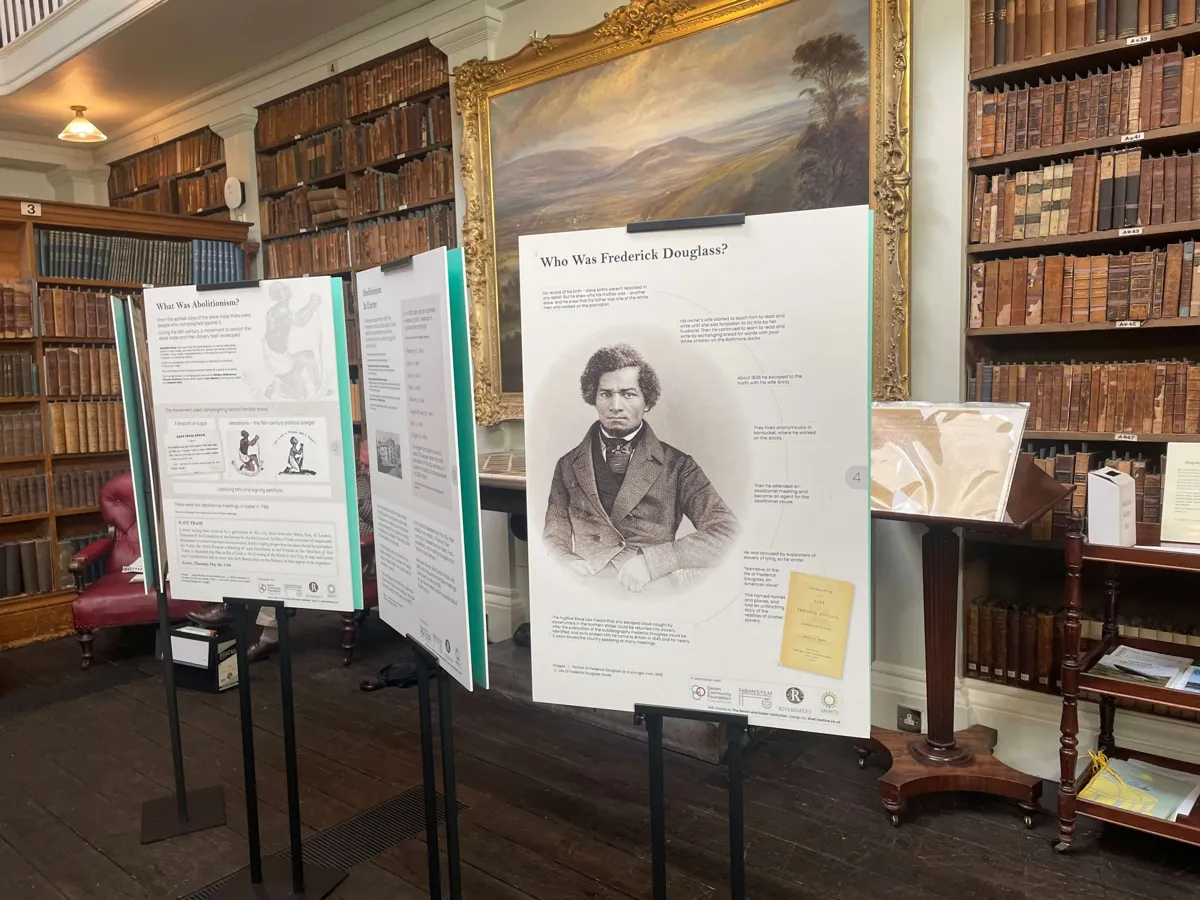
For a long time hardly anyone in Exeter knew Douglass had been here. Riversmeet, the Exeter company behind the play, says the visit came to light in 2005. Richard Bradbury found a reference to it in a copy of the Exeter Flying Post held at the Devon and Exeter Institution.
The project behind the play took shape from there:
- 2022: Riversmeet teamed up with John Sealey of Fabian’s Film, and with Dave Samuels and Nev Connor of Ubuntu Educational and Mentoring Services
- 2023: a short film about the visit, with support from the Devon Community Foundation, shot in the building Riversmeet says once housed the Exeter Assembly Rooms where Douglass spoke
- 2025: Fabian’s Film received a £1,200 Exeter City Council grant for community events, and an early version of the play ran at the Devon and Exeter Institution and Exeter Central Library
- 2026: the full-length play, at the Cygnet and then on tour
(Riversmeet; Exeter City Council, 18 September 2026)
The council says Riversmeet developed the play with groups from Exeter’s Caribbean and refugee communities. Cllr Lucy Findlay, the council’s lead for culture, called it an example of how “City Council grants can support culture in Exeter”.
What it means for you
If you want to go, book soon: the Cygnet is a small theatre and both nights had fewer than 50 tickets left on the booking page when we checked.
If you miss Exeter, the tour carries on:
- Tuesday 6 October: Bridport Arts Centre
- Wednesday 7 to Saturday 10 October: Alma Tavern Theatre, Bristol
The Telling Our Stories page linked above carries a longer extract from the Western Times account of the speech.
For more on what is happening in the city this autumn, see our guide to things to do in Exeter and our October half term listings.
Sources
- Exeter City Council, “Story of slave abolitionist’s visit to Exeter comes to the stage”, 18 September 2026
- Riversmeet, Frederick Douglass Project, for the 2005 discovery, the project history and the tour dates
- Telling Our Stories, Finding Our Roots: Frederick Douglass visits Exeter to address abolitionists, for the date, the venue and the Western Times report
- Cygnet Theatre ticket listings for 1 October and 2 October, for times, prices, availability and the address
Have your say