
The average Exeter home sold for £280,982 in June 2026, down 1.7% while England rose 1.8%. Prices by property type, and how the city sits against Devon.
Asking prices in the agents’ windows on Queen Street tell you what sellers hope for. The figure that counts is what homes actually change hands for, and HM Land Registry records that once a sale completes. This is a plain read of those numbers for Exeter: the average price, which way it is moving, what you pay by property type, and the fact that surprises people most, which is that a cathedral city with a Russell Group university is now cheaper than the England average.
The headline figure
The average home in Exeter sold for £280,982 in June 2026, according to the provisional UK House Price Index, which is built from completed Land Registry sales rather than asking prices.
That is down 1.7% over the twelve months to June 2026. Over the same year England rose 1.8% and the South West rose 1.9%. Exeter went the other way, and by enough that the city has slipped below the national average: England stood at £293,262 in June 2026, so a typical Exeter home is now about £12,280 cheaper than a typical English one.
That is not the usual shape of things here. Exeter has the university, the hospital, the county council and the regional offices, and it sits at the point where the M5 stops and the far South West begins. The city normally prices above Devon, not below it.
Exeter against the rest of Devon
| Area | Average price | Annual change |
|---|---|---|
| East Devon | £345,757 | +3.5% |
| Devon (county) | £304,968 | -0.1% |
| South West | £304,562 | +1.9% |
| Teignbridge | £303,564 | +0.8% |
| England | £293,262 | +1.8% |
| Exeter | £280,982 | -1.7% |
| Torbay | £223,577 | -0.9% |
| Plymouth | £222,817 | +4.4% |
Two things stand out. Exeter is cheaper than the two districts wrapped around it, East Devon and Teignbridge, so the money goes further inside the city boundary than it does in Exminster, Topsham’s rural neighbours or the Exe estuary villages just beyond. And Plymouth, the one place in this table that is clearly cheaper, is also the one place clearly rising, up 4.4% on the year.
The Exeter fall is real but it is not a collapse. A 1.7% drop takes £4,919 off the average sale, which is inside the range a single quiet quarter of sales can produce in a district this size.
Prices by property type
The average hides a wide spread. These are the Exeter figures for June 2026:
- Detached: £515,379, down 2.1% on the year. The premium is heavy, but by southern England standards a detached house in a city this size is not dear.
- Semi-detached: £343,252, down 1.0%. Well above the district average, which tells you how much weight the flats carry in the overall number.
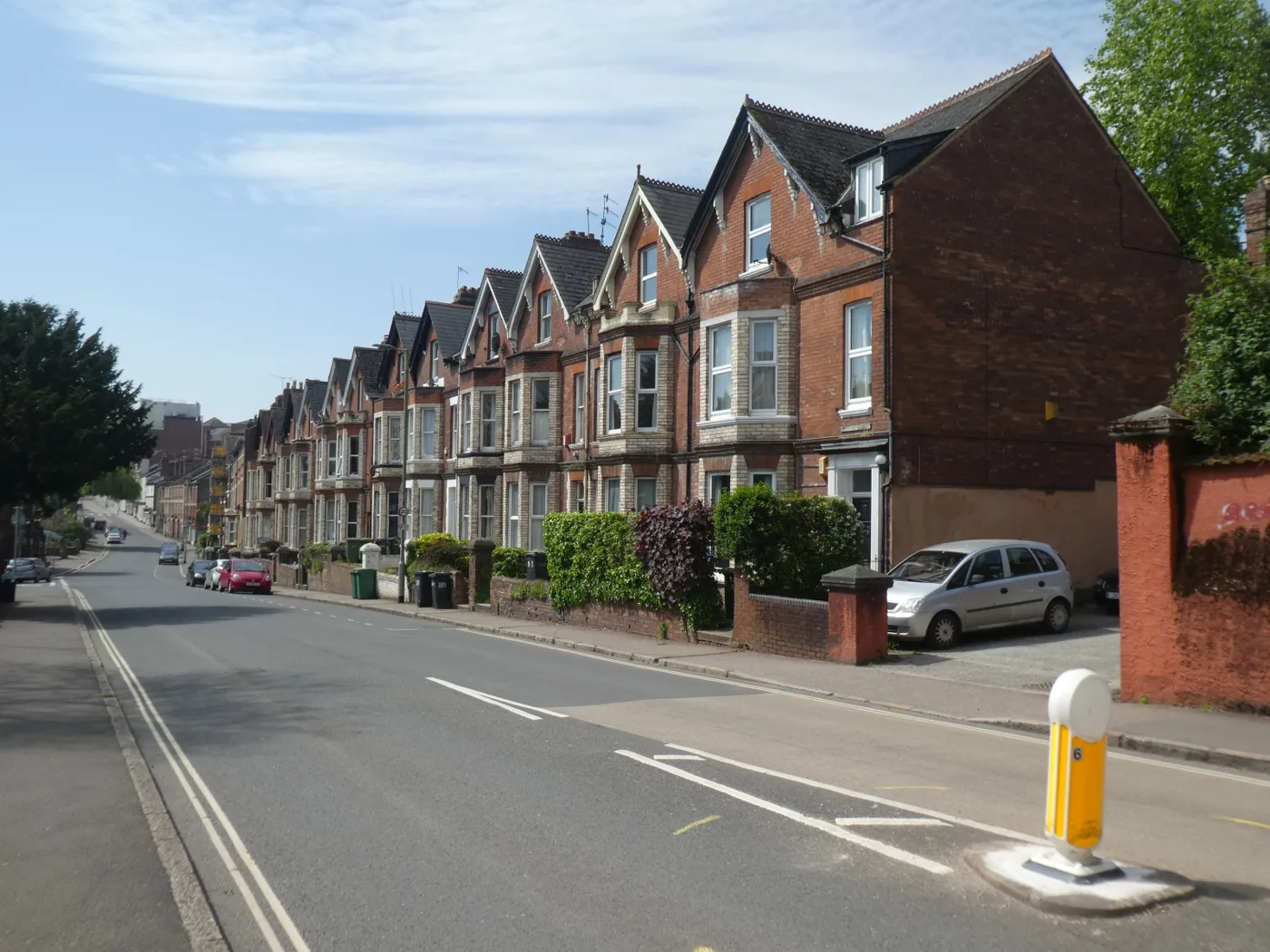
- Terraced: £280,798, down 0.8%. Almost exactly the district average, because the Victorian and Edwardian terraces of Newtown, St Thomas, Heavitree and Exwick are the shape of much of the city’s stock.
- Flats and maisonettes: £164,582, down 4.0%. This is the category doing the damage.
The flat figure is where the whole story sits. Flats fell roughly twice as fast as any other type, and Exeter has a lot of them, built around the quay, the station approaches and the university fringe over the past twenty years. A city with a large student population also has a large investor-owned flat market, and that is the part of the market most exposed to higher mortgage costs and to changes in how buy-to-let is taxed.
First-time buyers and movers
A first-time buyer in Exeter paid an average of £241,749 in June 2026, down 1.7% on the year. A home mover, someone selling one property to buy another, paid £338,894, also down 1.7%.
The £97,000 gap between those two is the size of the step from a flat or a terrace to a family house in this city. For first-time buyers the £241,749 figure has one useful property: it sits comfortably below the £300,000 first-time buyer stamp duty threshold, so a typical Exeter first purchase attracts no stamp duty at all.
Renting is the other half of the picture, and it has not softened in the way buying has. The average monthly rent in Exeter was £1,317 in June 2026, up 1.5% on the year. Prices falling while rents rise is an unusual combination, and it is what you would expect in a city where demand for somewhere to live is steady but demand to own is not.
What this means if you are buying or selling
If you are selling, a market down 1.7% while England is up 1.8% does not reward optimistic pricing. It is a particularly poor moment to be selling a flat. If you are buying, you have more room to negotiate here than almost anywhere in the South West, and the flat market in particular is weak enough to bargain in. If you are staying put, your home has given back roughly one year of gains in cash terms.
Two things worth checking before you commit to a road. What is allocated near it in the new Exeter Plan, which proposes 13,975 homes to 2041 and names every site. And how you would actually get to London, since the train is a two-hour trip and an annual season runs into five figures, which changes the arithmetic on a commuter move in a way it does not in Kent or Essex.
Where to check a specific street
Every completed sale in England and Wales is public. Look up a street or a single address for free on the HM Land Registry Price Paid service. That is the same data behind the figures on this page, without the averaging, and it is the only way to see what the house three doors down actually went for.
Frequently asked questions
What is the average house price in Exeter?
The average Exeter home sold for £280,982 in June 2026, according to the provisional UK House Price Index built from HM Land Registry sales. That covers all property types across the whole city.
Are Exeter house prices going up or down?
Down. Prices fell 1.7% in the year to June 2026, while England rose 1.8% and the South West rose 1.9%.
Is Exeter cheaper than the rest of Devon?
Yes. Exeter averaged £280,982 in June 2026 against £304,968 for Devon as a whole, £345,757 in East Devon and £303,564 in Teignbridge. Only Plymouth and Torbay are cheaper.
How much is a flat in Exeter?
An average of £164,582 in June 2026, down 4.0% on the year, which is the sharpest fall of any property type in the city. A detached house averaged £515,379, so a detached home costs roughly three flats.
What does a first-time buyer pay in Exeter?
An average of £241,749 in June 2026. That is below the £300,000 first-time buyer stamp duty threshold, so a typical first purchase in Exeter pays no stamp duty.
Sources
- UK House Price Index, Exeter (ONS / HM Land Registry) for the city average, annual change, property-type and buyer-type figures and the average rent.
- Land Registry UK House Price Index data for the exact Exeter, Devon and England figures, all June 2026.
- UK House Price Index, Teignbridge, East Devon, Plymouth and Torbay for the neighbouring-area comparisons.
- HM Land Registry Price Paid search to check any individual address.
Figures are provisional and are revised as more sales complete. Confirm the latest numbers against the linked sources before making a decision.
Have your say