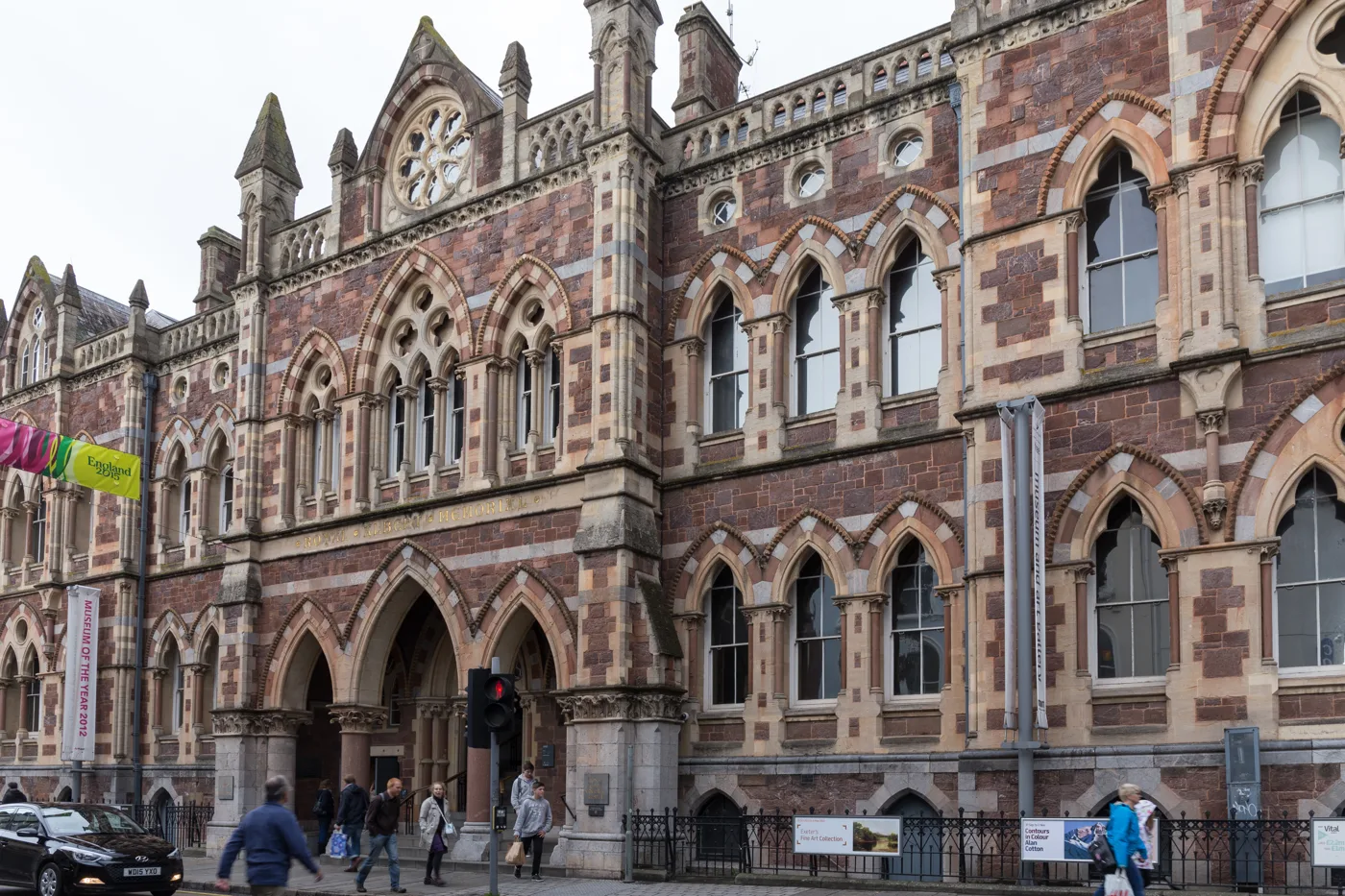

Councillors backed £260,000 of match funding on 25 August, behind a £2.4m Arts Council bid to replace RAMM's failed boiler and reopen the Roman Wall Bridge.
Update, 30 August 2026: councillors took the grant route. At the extraordinary meeting on 25 August they agreed to allocate up to £260,000 in match funding towards the Arts Council England MEND Round 6 bid, which the council says would unlock around £2.4 million of external investment. The council’s announcement makes no mention of the £665,000 outright replacement, the option the report described as mutually exclusive with this one. Cllr Lucy Findlay, lead councillor for culture and city centre, called it “an important investment in one of Exeter’s most cherished cultural institutions”. (Exeter City Council, 28 August 2026) The full application is due with Arts Council England by 4 September. The original report of the debate follows.
One of the two boilers heating the Royal Albert Memorial Museum has already failed, and the surviving one is being kept running on parts taken out of the dead unit. On Tuesday evening, Exeter councillors decide how to pay for the replacement.
They are being asked to choose between two routes, and the report is explicit that they cannot have both. (Exeter City Council, report to Council, Royal Albert Memorial Museum (RAMM): Critical Environmental Infrastructure and Roman Wall Bridge Restoration, 25 August 2026, PDF)
The full Council meets in an extraordinary session at the Guildhall on High Street at 6pm on Tuesday 25 August. RAMM is the only item of business on the agenda. (Agenda, Extraordinary Meeting of the Council, 25 August 2026)
What councillors are being asked to approve
The report from the Strategic Director of Place puts three recommendations to the meeting:
- a capital allocation of up to £260,000 as the council’s share of a bid to Arts Council England’s Museum Estate and Development fund, worth about £2.4 million, but only if that bid succeeds
- delegated authority for officers to submit the final application, which Arts Council England has asked for by 4 September 2026
- a capital allocation of £665,000 to replace the boiler and chilled water systems outright, as a fallback if the bid fails or if the plant gives out before the answer comes back
Recommendations one and three are described in the report as mutually exclusive. The £665,000 is the estimated cost of a like-for-like replacement, and the report is clear that this work has to happen either way. What the grant would buy is the wider scheme on top of it.
Why it is urgent
RAMM’s boilers and chilled water system were installed in 2007/08 and are now about 18 years old. Condition surveys and specialist mechanical and electrical advice have confirmed what the report calls significant deterioration.
One of the two boilers has already failed. The remaining boiler is running using components removed from the failed unit, with no backup heating available if it stops. The chilled water system is corroding. The report puts the likely failure timeframe at nought to two years.
That matters for more than comfort. RAMM is an accredited museum and has to hold particular environmental conditions to protect its collections and to satisfy the institutions that lend it objects. Failure of either system, the report says, could result in the closure of RAMM, place nationally significant collections at risk, and affect the museum’s ability to meet accreditation and lender requirements.
What the borrowing costs
The council does not have the money sitting there. It would borrow it, and the Section 151 Officer has set out what that means at current rates of 6.26% over 25 years.
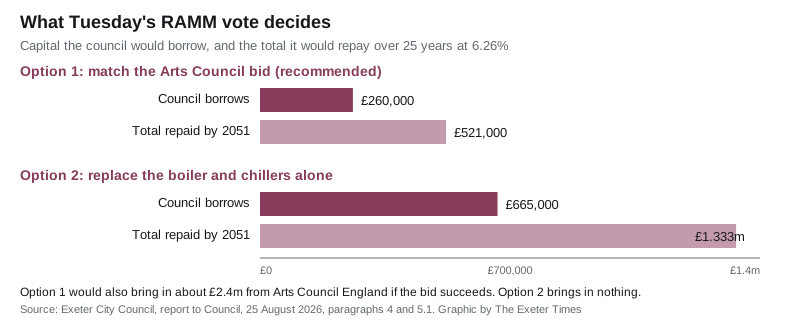
Borrowing the £260,000 costs £20,844 a year and £521,000 in total. Borrowing the £665,000 costs £53,313 a year and £1.333 million in total. On the council’s own figures, the cheaper option for the taxpayer is the one that depends on a grant nobody has won yet.
The Roman wall bridge
The bid is not only about plant. It also covers replacing the decking on the Roman Wall Bridge, which has been closed to the public for about eight years. The bridge is the point from which visitors can look at Exeter’s Roman city wall, and the report says its closure has cut off interpretation and public engagement with one of the city’s most significant heritage assets.
Reopening it, according to the report, would restore that route, improve access to the wall, and help build the relationships with funders that Exeter would need for grant aid on other heritage sites.
Preparatory work behind the bid includes an AECOM heat decarbonisation plan, mechanical and electrical investigations, a condition survey by McLaren Design Services, and engagement with Historic England’s specialist advisors. The report was written by Joseph Harvey, General Manager Culture, under Ian Collinson, Strategic Director of Place.
What it means for you
RAMM is free to get into, and it is not closing this week. Nothing in the report proposes shutting the museum; the closure risk is what officers say could follow if the remaining boiler goes. Opening hours and what is on are on RAMM’s own visit page, and our things to do in Exeter page lists the museum alongside the city’s other attractions and their prices.
The museum is not a small line in the city’s accounts. It drew more than 190,000 visitors in 2024-25 (RAMM, Annual Review 2024-25), and a South West Museum Development survey put its value to the local economy at over £5 million a year, based on 2022/23 figures (RAMM, 8 May 2024).
Tuesday’s meeting is open to the public at the Guildhall. The deadline for submitting public questions on the agenda passed at 10am on Wednesday 19 August, so anyone attending now goes to listen rather than to speak. Enquiries go to democratic.services@exeter.gov.uk.
Whichever way the vote goes, the work itself will need heritage and planning consents before anything is installed, which is where it will show up next in the public record. We track those on our Exeter planning news page.
The Arts Council decision on the bid is not expected before the application goes in on 4 September. We will report it when it comes.
Have your say