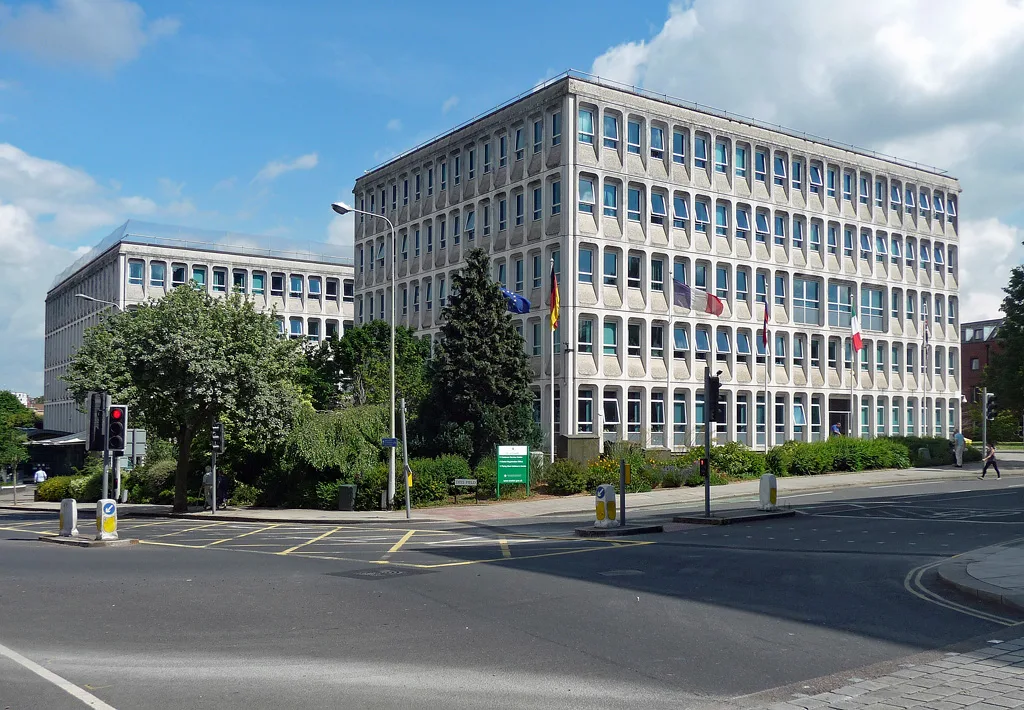
Exeter's promised unitary status is on hold after the government paused reorganisation on 7 September. City council elections go ahead as usual in May 2027.
Exeter’s plan to become a unitary council in 2028 has been put on hold. The government paused local government reorganisation across 14 areas on 7 September, Devon among them, less than two months after approving a four-council model that would have expanded Exeter to take in 49 surrounding parishes.
Exeter City Council’s leader, Cllr Phil Bialyk, said he was disappointed. Devon County Council, which fought the same decision and had prepared to take the government to court over it, called the pause “great news”.
One thing is settled either way. The government has confirmed that the local elections in May 2027 will be held on existing council boundaries, which means Exeter City Council elections go ahead as normal rather than being replaced by a vote for a new authority. The council has 39 members.
What had been decided in July
On 16 July the Ministry of Housing, Communities and Local Government approved the joint proposal put forward by Exeter and Plymouth city councils. It would have replaced Devon County Council and every district council in the county with four unitary authorities.
Exeter City Council’s own account lists them as:
- an expanded Exeter, the city plus 49 surrounding parishes taken from Teignbridge, East Devon and Mid Devon
- an expanded Plymouth, the city plus 13 parishes from South Hams
- an expanded Torbay, plus 21 nearby parishes
- Devon Coast and Countryside, a new council for rural and coastal areas
Devon County Council, which had submitted a rival business case, said at the time that the milestones ahead were a Structural Change Order, elections to the new authorities in 2027 and a vesting day in 2028.
What the pause actually changes
Angela Rayner, the Secretary of State for Housing, Communities and Local Government, told Parliament on 7 September that the review follows legal advice. Devon County Council’s own report of the statement quotes her:
In that context, in light of legal advice, I want to satisfy myself firstly that the right process is in place, that it is robust, and of course complies with the law. And secondly, I want to fully test whether our proposals for local government reorganisation meet the priorities of a new administration and a new Prime Minister.
Devon is one of 14 areas being reviewed. Its decision has been paused rather than withdrawn, unlike the March decisions for Essex, Hampshire, Norfolk and Suffolk, which the government cancelled outright the same day. No date has been published for the review to report.
For Exeter that means:
- Exeter City Council carries on, with no abolition date in place
- the May 2027 poll is an ordinary city council election on today’s ward boundaries, not an election to a shadow unitary authority
- the 49 parishes named in July are not, for now, joining the city
- nothing changes about who collects your bins, sets your council tax or decides planning applications
The two council leaders read it very differently
Cllr Bialyk, who leads Exeter City Council, backed the four-council model and lost it less than two months after winning it.
I’m disappointed that Exeter’s long wait for unitary status will now be delayed while this review takes place.
He added that he understood the need for a review, because a new prime minister and a new administration needed to be satisfied that the right decisions had been made and the right processes followed.
He called reorganisation “the biggest change for Exeter for more than 50 years” and said the joint submission with Plymouth “remains the right one for all residents and communities in the county”.
At County Hall the mood was the opposite. Cllr Julian Brazil, the county council leader, welcomed the pause as “good news for the people of Devon” and said the county was “best placed” to reform local government its own way. Cllr Michael Fife Cook, who leads the Reform opposition group there, said the county now had the chance “not to waste £80 million on rebranding and reinventing the wheel”.
Devon has not dropped its legal challenge
Devon County Council had instructed lawyers to seek a judicial review of the July decision. It has not abandoned that. On 10 September its councillors agreed to defer a decision on issuing proceedings while they ask the government what the pause and the review actually mean.
We haven’t suspended our judicial review, because we need to get clarification from government. We need to understand what they mean by pause, what they mean by review.
That was Cllr Brazil, who added that the council would “take all necessary steps to protect our position, including preserving our ability to issue judicial review proceedings if required”.
What it has already cost
The clearest figures published so far come from the county council’s finance papers, not from Exeter’s.
- The Exeter and Plymouth business case put implementation costs across Devon at £70.1 million.
- Devon County Council’s own later work suggested the eventual cost “could approach £90 million”.
- The government confirmed transition funding of £900,000 for each new authority, which on a four-council model is £3.6 million.
- The county council had been due to set aside £30 million of its reserves to cover implementation up to the proposed vesting day of 1 April 2028. After the pause, councillors agreed not to create that reserve.
The council is now writing to the Secretary of State to ask for its costs back. Cllr James Buczkowski, its cabinet member for finance, said staff had been diverted and work commissioned across finance, HR, legal, data, ICT and governance because government had instructed councils to prepare.
Somebody has to pay for that. And I do not believe that somebody should be the council-tax payers of Devon.
What it means for you
Nothing about your day to day dealings with the council changes this week. Bins, council tax, parking and planning all stay exactly where they are, and Devon County Council said in July that services would “continue to operate as normal” throughout.
Three things are worth putting in the diary.
There will be an Exeter City Council election in May 2027. That was in doubt under the July decision, which would have turned the same poll into an election for a new unitary authority covering the city plus 49 parishes. It is now an ordinary city election on the wards that exist today.
If you live in one of the 49 parishes, you are not moving councils yet. The county council published a postcode checker in July showing which new authority each address would fall into. Treat anything it tells you as paused rather than settled.
There is no published deadline for the review. The government has not said when it will report, so the April 2028 date that appeared on council documents all summer should now be read as an intention that has been suspended, not a plan.
You can check the current position on Devon County Council’s own devolution and reorganisation pages. Our practical Exeter pages are unaffected: bin collection days, council tax bands, parking and planning applications.
Sources
- “Council Leader responds to pause in Local Government Reorganisation”, Exeter City Council, 7 September 2026 for Cllr Bialyk’s quotes, the four approved councils and the confirmation that Exeter City Council elections will be held as usual in May 2027.
- “Local Government reorganisation plans on hold”, Devon County Council, 7 September 2026 for Angela Rayner’s statement to Parliament, the withdrawal of the Essex, Hampshire, Norfolk and Suffolk decisions, and the quotes from Cllr Brazil and Cllr Fife Cook.
- “Devon council seeks further clarification from government before taking a decision to issue proceedings”, Devon County Council, 10 September 2026 for the deferred judicial review decision.
- “Council calls on Government to reimburse Devon for reorganisation costs”, Devon County Council, 9 September 2026 for the £70.1m and £90m estimates, the £900,000 per authority transition funding and the abandoned £30m reserve.
- “Government confirms four unitary model for local government reorganisation in Devon”, Devon County Council, 16 July 2026 for the July decision, the milestones and the postcode checker.
- Exeter City Council councillor index for the 39 members.
Have your say