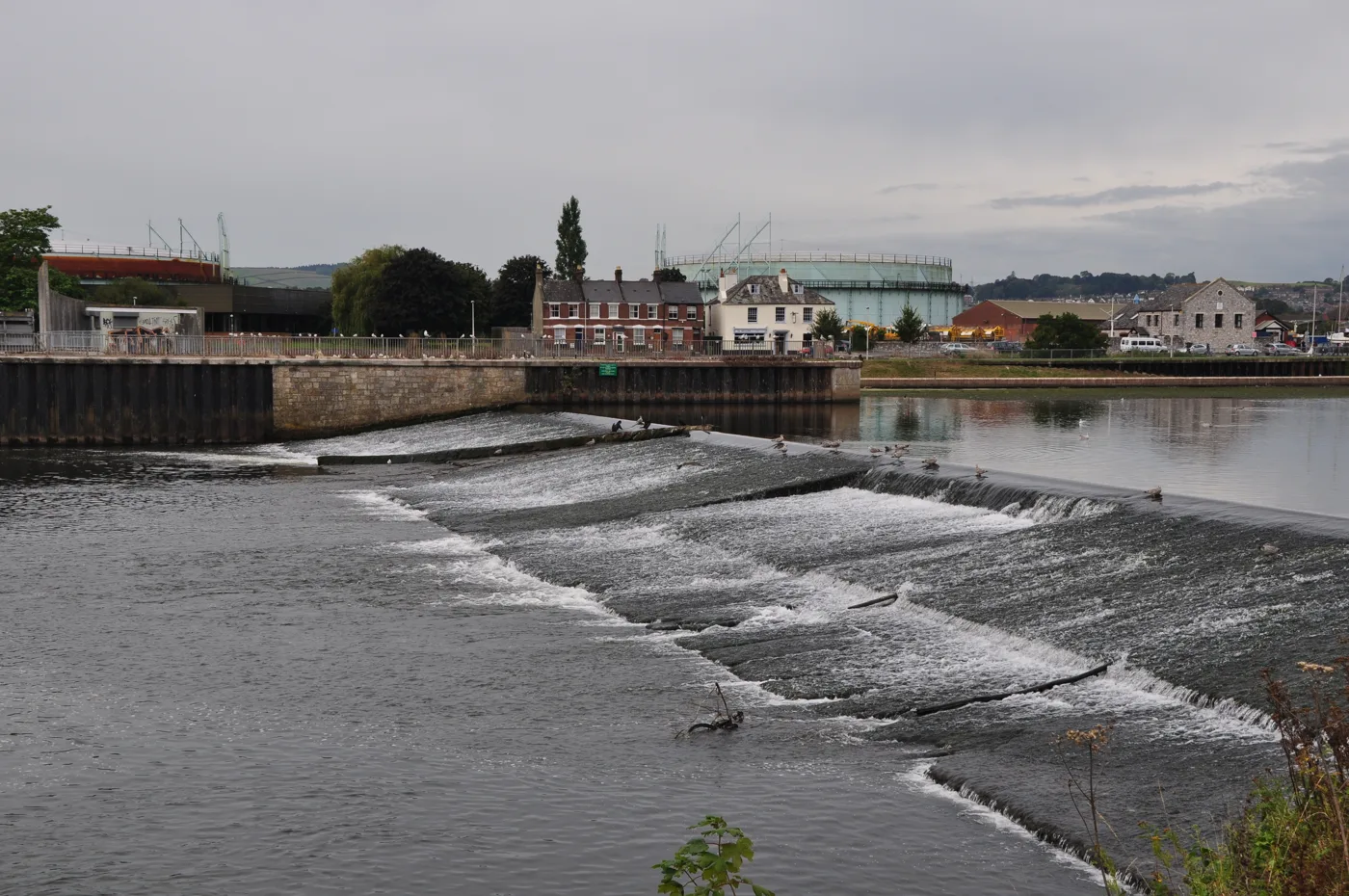

South West Water has asked Defra for a drought order banning non-essential business water use in Exeter. Wimbleball, which tops up the Exe, was 18% full on 4 Oct.
South West Water has asked the Government for the power to ban non-essential water use by businesses in Exeter. If Defra agrees, car washes, commercial plant watering and the cleaning of business premises with mains water would be restricted across the city and much of Mid and East Devon. Households are not covered, but the hosepipe ban that has applied since 8 August stays in place. (South West Water, 6 October 2026)
The company applied to the Secretary of State for Environment, Food and Rural Affairs for a drought order on 6 October. The Environment Agency’s weekly drought report records the application on that date. (Environment Agency, dry weather and drought in England, 2 to 8 October 2026)
No decision has been announced. The company says the area covered and the start date will only be published if the application is approved.
What the ban would cover
The proposed restrictions apply to businesses and other non-household customers, not to homes. South West Water lists seven categories:
- watering plants on commercial premises
- filling or maintaining certain non-domestic swimming pools and ponds
- vehicle washing
- cleaning non-domestic buildings and premises
- cleaning industrial plant
- dust suppression
- other specified non-essential uses of mains water
The area named is “Exeter, Exmouth, Crediton, Sidmouth, Tiverton and surrounding areas across Mid and parts of East Devon”, plus a small part of Dorset including Lyme Regis. Exmouth is about ten miles south east of the city, Crediton about eight miles north west and Tiverton about fifteen miles north. (South West Water, non-essential use ban)
That is the Exe catchment, and the reason is the river. South West Water takes water from the Exe at its Pynes and Allers treatment works. When the river falls below a set flow, the company releases water from Wimbleball Lake on Exmoor to top it up. Dry weather has pushed the Exe below that threshold, so the reservoir has been propping up the river. Colliford and Roadford, which play the same role for the Fowey and the Tamar, have not fallen as fast. (South West Water, reservoir levels)
Wimbleball at 18 per cent
Wimbleball was 18 per cent full on 4 October, against 30 per cent at the same point last year. It serves around 390,000 people. The Environment Agency’s weekly report classes it as exceptionally low, and puts the Wimbleball supply zone at drought level 3, the highest of the company’s zones. Colliford and Roadford are at level 1. (Environment Agency, 8 October 2026)
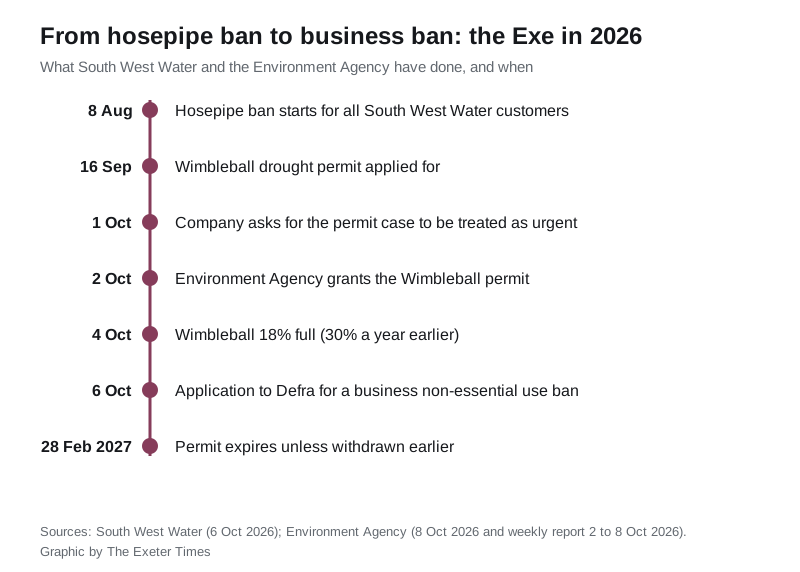
To slow the drain, the Environment Agency granted South West Water a drought permit for Wimbleball on 2 October. The permit lets the company pause the normal compensation flow it releases into the River Haddeo below the dam, provided it sends at least the same volume downstream to support abstraction from the Exe. It runs until 28 February 2027 unless withdrawn earlier.
The permit took a fortnight to get:
- 16 September: South West Water applies for the permit
- 29 September: the application is amended
- 1 October: the company asks for the case to be treated as urgent, which removes the need for a public hearing of objections
- 2 October: the Environment Agency grants it
- 6 October: the company applies to Defra for the business ban
- 8 October: the Environment Agency announces the permit
The agency said the permit on its own will not secure supplies, and that the company must keep following its drought plan. Joanne Laeger, its area drought manager, said: “The goal is to get the most out of our water supplies.”
Why rain has not fixed it
Devon, Cornwall and the Isles of Scilly remain formally in drought. The Environment Agency’s report for the week to 8 October says rainfall across England so far in October is 10 per cent of the long-term average, and that the South West received a similar amount to the week before. The agency has said parts of the region could stay in drought into spring 2027. If the winter brings above-average rain, it expects the area to reach what it calls a fragile recovery by early April. If not, the South West goes into next summer already short.
South West Water says that in some parts of the region, water that would usually be taken from rivers has instead come from reservoirs since as early as March. Sam Bottomley, its director for drinking water services, said: “Many people understandably think a drought is over once it starts raining. In reality, recovery takes much longer. After such a prolonged dry period, rainfall first has to replenish dry soils and the wider environment before rivers return to seasonal levels. Only then can reservoirs begin to recover properly.”
He called the application “a responsible step to help protect the environment and preserve the water we have available”, and said acting now reduced “the risk of further restrictions and supply outages”.
The company says it is fixing around 70 leaks a day, and repaired more than 26,700 in the past twelve months. (South West Water, non-essential use ban FAQs)
What it means for you
If you run a business in Exeter: nothing changes today. The ban only takes effect if the Secretary of State approves the order and drought conditions still hold at that point. South West Water says it will give advance notice, contact affected customers directly where it can, and publish guidance if the order is granted. It also says any ban would be reviewed regularly and lifted once resources recover. The company’s FAQ does not yet set out exemptions, penalties or how to apply for one, so those details are still to come.
If you wash cars, run a garden centre, a car valeting business, a hotel with a pool, or clean buildings for a living: your activity is on the list. It is worth planning now for how you would operate without mains water for those tasks, for instance by switching to recycled or harvested water.
If you are a household: the drought order does not apply to you. The hosepipe ban does. It has run since 00:01 on Saturday 8 August across Devon, Cornwall, parts of Dorset and Somerset and the Isles of Scilly, and bans using a hosepipe to water a garden, wash a car, fill a paddling pool, pool or hot tub, or clean a patio, driveway, walls or windows. Drinking, washing and cooking are unaffected. (South West Water, hosepipe ban)
What to watch: a Defra decision. Objections to a drought order go to the Secretary of State, who decides after considering them. We will update this story when the outcome is published.
If you are planning a garden or landscaping project this winter, our Exeter planning applications page lists what is being built where, and bin collection days covers garden waste.
Sources
- South West Water applies for non-essential water use restrictions due to pressure on local water resources, South West Water, 6 October 2026
- Non-essential use ban, South West Water and its FAQs
- Drought permit granted to support Wimbleball Reservoir, Environment Agency, 8 October 2026
- Dry weather and drought in England: 2 to 8 October 2026, Environment Agency
- Reservoir levels, South West Water
- Hosepipe ban, South West Water
Have your say